
Tasting Technique & Sensory Skills · 7 min read
What Do Tannins Feel Like? How to Describe Them
What do tannins feel like? A drying, grippy texture, not a flavor. Learn what causes it and a simple three-question way to describe tannins in wine.
Intro
Someone at a tasting bar swirls a young Cabernet Sauvignon and says it has "firm tannins." You nod along, but you're not sure if that's a flavor, a smell, or something else entirely.
What do tannins feel like? Dry, grippy, and a little rough, like your cheeks are being tugged toward your teeth.
Tannin isn't a taste you find on your tongue. It's a texture, and once you know where to feel for it, you can describe it as clearly as the person pouring.
Here's what tannins are, why they make your mouth pucker, a kitchen test you can try tonight, and a simple three-question way to put the feeling into words.
Why Should You Care About Tannin?
Tannin is one of the main things that makes one red wine different from another. A thin-skinned grape like Pinot Noir makes a wine that's very low in tannin, while thick-skinned Cabernet Sauvignon makes one with much more.
If you can describe tannin, you can ask for the red you actually want. "Something soft and silky" points a server toward a Gamay or a Pinot Noir. "Something with real grip" points them toward a Nebbiolo, a Tannat, or a Cabernet.
Tannin also explains advice you've probably already heard. It's why some reds get better after years in the bottle, and why a big red tastes smoother next to a steak than on its own.
It's also the part of tasting people find hardest to put into words. Wine Spectator calls tannin "something you feel," and most of us were never taught words for feelings in our mouths.
A Word Borrowed From the Leather Tannery

The word "tannin" comes from leather-making, not winemaking.
It entered French in 1798 and English in 1802, naming the plant substance that turns animal hide into leather. The roots go back to Medieval Latin tannum, meaning crushed oak bark, which tanners soaked hides in for centuries.
That's more than trivia. Tanning works because tannins bond tightly with collagen, the main protein in hide. A much milder version of that same grabbing happens with the proteins in your saliva every time you sip a young red.
The second story is more recent. In 2000, Richard Gawel and researchers at the Australian Wine Research Institute published the Red Wine Mouth-feel Wheel, a chart of words for how red wine feels. It lists 53 different terms, grouped into six classes: astringency (that drying, puckering feeling), acidity, body, texture, heat, and irritation.
Some of those words, like silky and dry, come up all the time. Others, like chalky, furry, and chewy, describe rarer sensations. What I like about this is the reassurance: if researchers needed dozens of words, it's no wonder the rest of us fumble for one.
What Do Tannins Feel Like in Your Mouth?
Tannins are natural plant compounds (scientists call them polyphenols) found in everything from tea leaves to tree bark. In wine, they come mostly from grape skins, seeds, and stems, with more added when a wine ages in oak barrels.
Red wine is tannic because the juice sits with the skins and seeds while it ferments; white wine juice is usually pressed off right away.
What's happening inside your mouth
Your saliva is full of proteins that keep your mouth slippery. Tannins latch onto some of those proteins and pull them out of action. Less lubrication means more friction, and friction is what you feel as dryness.
That's why scientists call it a touch sensation rather than a taste. It's closer to sandpaper on your fingers than sugar on your tongue.
In practice, you'll feel a drying, tugging sensation on your cheeks and gums. With a big, young red, it can even feel like your teeth are sticking to your gums.
A kitchen test you can try tonight
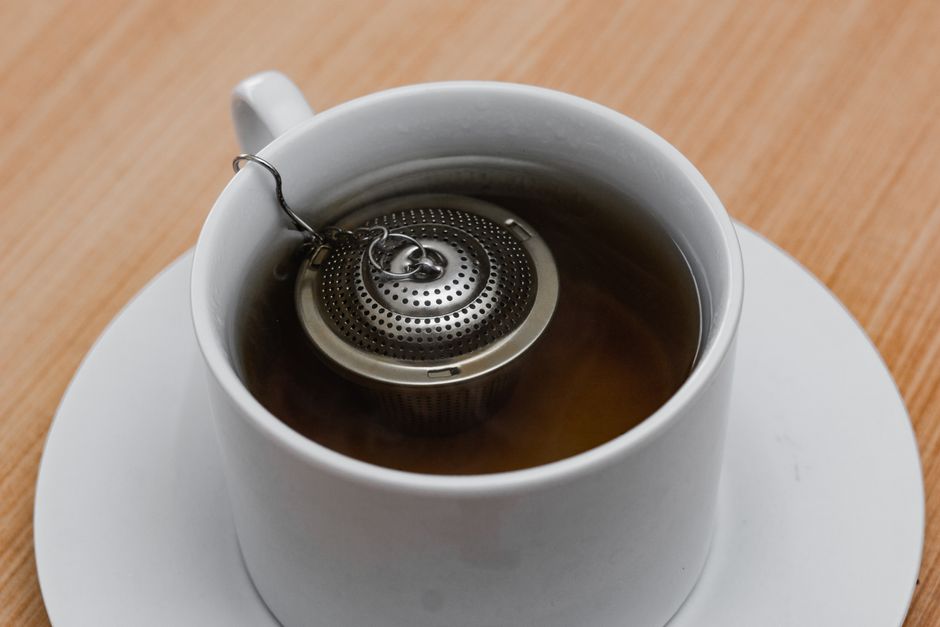
You already know this feeling from black tea, which is heavily tannic. Let a bag of black tea steep far too long, take a sip, and rub your tongue against the roof of your mouth. Wine Folly describes the result as feeling "like fine sandpaper."
Strong black tea is the cheapest tannin lesson there is. Taste the tea, then a young Cabernet, then a Pinot Noir, and you'll feel the scale from grippy to gentle in about five minutes.
If you want to make an evening of it, line the three up in that order and have a glass of water handy between each. Take notes on just one thing: how dry does your mouth feel, from one to five?
Why tannins soften with age
In a young wine, tannins are small and grab onto saliva proteins easily, which is why young reds can feel rough. Over time they link together into longer chains. Those longer chains grab less, so the wine moves from grippy to velvety.
Eventually some chains get too big to stay dissolved and settle out as sediment at the bottom of the bottle. That gritty layer in an old red is partly tannin that has stepped out of the wine entirely.
How to Describe Tannins Without Overthinking It
You don't need all 53 terms. Ask yourself three questions, in this order, and you'll have a description that's more useful than most tasting notes.
- How much? Is the drying barely there, moderate, or strong enough that you want a sip of water? "Low," "medium," and "high" are perfectly good answers.
- What texture? Run your tongue along your gums and the roof of your mouth. Does it feel smooth like silk or velvet, fine like sandpaper, powdery like chalk, or coarse and chewy?
- Does it fit? Does the tannin feel blended into the fruit, or does it stick out? Wine Spectator notes that "dry tannins" usually means tannins that aren't well blended in and feel distracting.
Put the three answers together and you have a full sentence: "Medium tannin, fine and chalky, nicely blended with the fruit." That's a real description, and nobody can call it snobby.
Here are words that match common feelings:
- Silky, polished, supple: smooth tannin you barely notice. Common in Pinot Noir and Gamay.
- Velvety: soft, but with some body behind it. Typical of a mature red.
- Fine-grained or sandpapery: you feel it, but the texture is even. Think of that oversteeped tea.
- Chewy, rustic, gritty: big tannin you notice right away. Common in young Nebbiolo, Tannat, and Cabernet Sauvignon.
My rule of thumb at a tasting bar: answer question one out loud and keep the other two in your head until you're sure. "This one's pretty grippy" is a perfectly good way to start a conversation with whoever's pouring.
Common Mistakes When Talking About Tannins

- Calling a tannic red "dry" when you mean tannin. In wine talk, a dry wine is one without sweetness. Say "drying" or "tannic" for the texture, and "dry" when you mean no sugar.
- Mixing up tannin and acidity. Acid makes your mouth water. Tannin makes it feel dried out. If you're salivating, you're probably noticing acid.
- Assuming tannin means bitterness. Tannins can add a little bitterness, but the main event is texture. Pay attention to your cheeks and gums, not the back of your tongue.
- Judging a big red without food. The proteins and fats in a steak bind with tannins, so there are fewer left to dry out your mouth. A wine that feels harsh on its own can feel smooth at dinner.
That last one is worth acting on. If a young red feels rough when you open it, don't write it off; try it again with the main course.
Conclusion
What do tannins feel like? A drying, grippy, slightly rough texture caused by plant compounds that strip the slippery proteins out of your saliva.
They come mostly from grape skins, seeds, stems, and oak. To describe them, judge three things: how much drying you feel, what texture it has (silky to chewy), and whether it blends in with the fruit.
Next time you're handed a red, skip the flavor hunt for a second and pay attention to your cheeks. That's where the tannin story is told.