
Wine Service, Storage & Handling · 7 min read
BYOB Etiquette: What to Bring (and Do) at Dinner
BYOB etiquette made simple: check the corkage fee, bring a bottle worth opening, chill it right, share a taste, tip on the wine and handle leftovers.

Intro
You've got a bottle you've been saving, and the little restaurant down the street lets you bring your own. Good BYOB etiquette is what turns that into a great night instead of an awkward one.
The short version: you're a guest using the restaurant's glasses, staff and time, so act like one. That means a quick phone call before you go, the right bottle at the right temperature, and a tip that reflects the service you actually got.
I'll take you through each step, plus what changes when the dinner is at a friend's house. None of it is complicated; most of it is just good manners with a corkscrew.
Why Does BYOB Etiquette Matter?
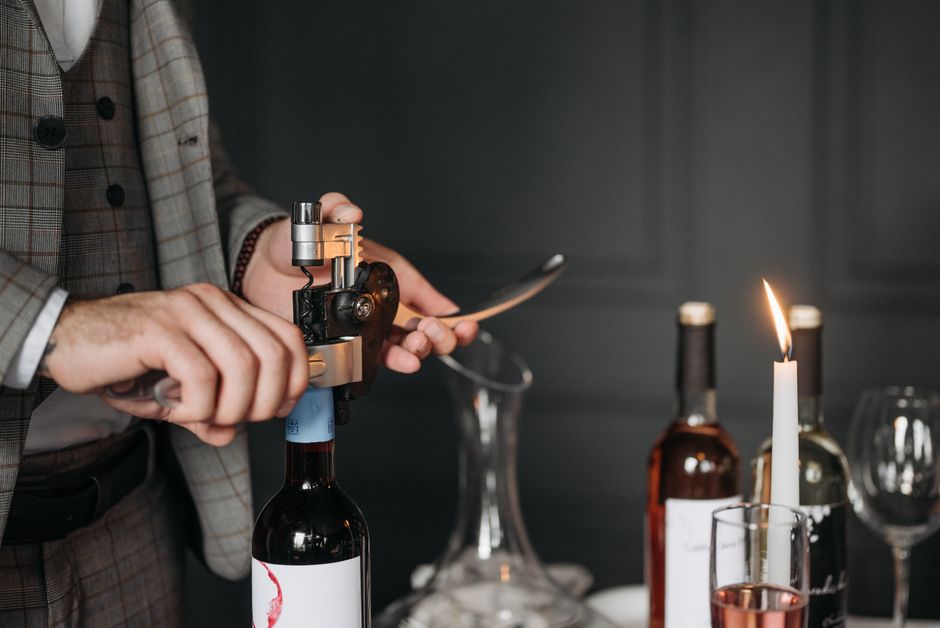
Wine sales are part of how a restaurant pays its bills. When you bring your own bottle, the restaurant still supplies the corkscrew, the glasses, the washing up and someone's time to pour.
A corkage fee isn't a penalty; it's the restaurant charging for the work it still does. Fees vary widely by restaurant and by place, from nothing at all to a flat charge per bottle. Some places that normally charge will waive it if you also buy a bottle from their list.
Rules on whether a restaurant can allow outside alcohol at all also vary by location, which is one more reason to ask first. Get the etiquette right and staff are often happy to help, from chilling your white to suggesting a dish that suits it. Get it wrong and you become the table they talk about after closing.
Where Did "Corkage" and "BYOB" Come From?

The word "corkage" is older than I'd have guessed: it's recorded in English from 1838. The Online Etymology Dictionary defines it as a charge hotel-keepers made for serving wine or liquor that guests brought themselves, rather than bought from the house. So the fee has been around about as long as the custom of carrying your own bottle in.
BYOB didn't start as "bring your own bottle," either. The earliest known example is "BYOL," for "bring your own liquor," which appeared in a 1915 newspaper cartoon in Montgomery, Alabama, the year that state went dry. After national Prohibition was set in motion in 1919, a joke about BYOL replacing RSVP on invitations made the rounds in newspapers.
"BYOB" popped up now and then in the 1920s, usually as "bring your own booze." It only became the usual form in the 1950s, when people read it as "bring your own bottle," and "bring your own beverage" was common by the 1970s. I rather like that the politest version came last.
How to Do BYOB Right, Step by Step

1. Check the restaurant's policy and corkage fee
Call ahead, every time, even if a website says BYOB is welcome. Here's what I'd ask:
- Is outside wine allowed?
- What's the corkage fee, and is it charged per bottle?
- Is it waived if we also buy something from your list?
If you're bringing more than one bottle, mention that too. It gives the restaurant time to set out enough glasses or a decanter.
2. Don't bring a wine that's already on their list
Bringing a bottle the restaurant already sells is the fastest way to look like you're dodging their markup. Check the wine list online before you go. If your bottle, or the same producer and vintage (the year on the label), is on it, leave yours at home and order theirs.
3. Bring something worth the fee
Corkage works best for a bottle the restaurant can't give you: something older, rarer or with a story. A wine you've cellared for ten years, a bottle from a trip, or a gift you've been waiting to open all qualify. A cheap everyday red you brought only to save money doesn't.
If you're unsure what will go with the food, versatile styles like Pinot Noir, Riesling or a dry sparkling wine suit most menus. Skip older bottles you haven't checked on recently, since they can be past their best.
My tip: if you're torn between two bottles, bring the one you'd most enjoy telling the story of at the table. That's exactly the kind of bottle corkage was made for.
4. Arrive with it at the right temperature
The restaurant may not have the time or fridge space to chill your bottle from room temperature, so do it at home. As a rough guide:
- Light whites and sparkling: around 3-7°C (38-45°F).
- Fuller whites: around 7-12°C (44-55°F).
- Bold reds: a little below room temperature, around 15-20°C (60-68°F).
Don't worry if you don't own a wine thermometer. The point is simply that whites arrive cold and reds don't arrive warm.
Carry the bottle in a proper wine bag or carrier, not a crumpled paper sack. Tell your server as soon as you sit down that you've brought your own wine so they can plan service.
5. Offer the server or sommelier a taste
If the bottle is special, offering a small pour to the person serving it is a gracious gesture. Many wine professionals love tasting something they don't often get to see. If they decline, take it in stride, since some are busy or not allowed to drink on shift.
A taste is a thank-you, not payment. It doesn't replace a tip.
6. Tip on the wine service too
Your server still opened, poured and looked after your bottle, so tip as if wine was part of the meal. Etiquette writers suggest a couple of ways to do it:
- Tip on the full bill, corkage included.
- Or add a little extra based on the approximate value of an average bottle on the restaurant's list.
Another nice move is to buy something from the list as well, like a glass of bubbly to start or a dessert wine. It supports the restaurant and often softens or removes the corkage charge.
7. Know what to do with leftovers
Most places will recork an unfinished bottle so you can take it home, but the rules depend on where you are. Some places require the bottle to be resealed, placed in a sealed or tamper-evident bag and carried with a receipt, and others restrict it more.
Ask your server how they handle it locally and follow their lead. If you're driving, check the local rules on open containers in a vehicle, and store the bottle where those rules say it should go.
What About BYOB at a Friend's Dinner?

At a friend's house, the bottle you bring is a gift, and the host isn't obliged to open it that night. They may have already chosen wines to go with each course, so don't hover or ask when yours will be poured.
If you'd like to share a particular wine with the meal, say so when you RSVP and ask whether it fits the menu. Otherwise, hand it over with something like "this one's for you to enjoy another time," and let the host decide.
I find that one line takes the pressure off everyone. The host gets a gift with no strings, and you don't spend the evening watching the bottle.
Common BYOB Mistakes

Nearly every BYOB misstep comes from treating corkage as a loophole instead of a service. The usual suspects:
- Showing up unannounced with a bottle. Not every restaurant allows outside wine, and policies can change.
- Bringing a supermarket bottle to save money. Staff can tell, and it undercuts the point of corkage.
- Expecting the fee to be waived. Corkage is a policy, not a reward for being friendly or ordering well.
- Lingering long after the meal. A long BYOB dinner ties up a table the restaurant needs. Book an earlier or later seating if you plan to take your time.
Conclusion
BYOB etiquette comes down to a few habits: call ahead, bring a bottle the restaurant can't offer, show up with it at the right temperature, share a taste, and tip on the wine service as well as the food. Treat corkage as a fair trade for the glassware and service, and most restaurants will be glad to see you and your bottle again.