
Tasting Technique & Sensory Skills · 7 min read
Why Do You Swirl Wine? What the Physics Says
Why do you swirl wine? It spreads a thin film that releases aroma and adds air. Here's the physics, how to swirl cleanly, and what wine legs really mean.

Intro
Watch anyone at a tasting bar and you'll see it within seconds: the little circular wobble of the glass before the nose goes in. It looks like ritual, maybe even a bit of showing off.
So why do you swirl wine? The swirl is a quick, physical way to pull aroma out of the wine and up into the bowl where your nose can find it. It also happens to be a motion physicists have filmed, modeled, and put to work far outside the wine world.
This post stays on the swirl itself: what's moving inside the glass, how to do it without a splash, and what those streaks running down the side actually mean.
Why Do You Swirl Wine at All?
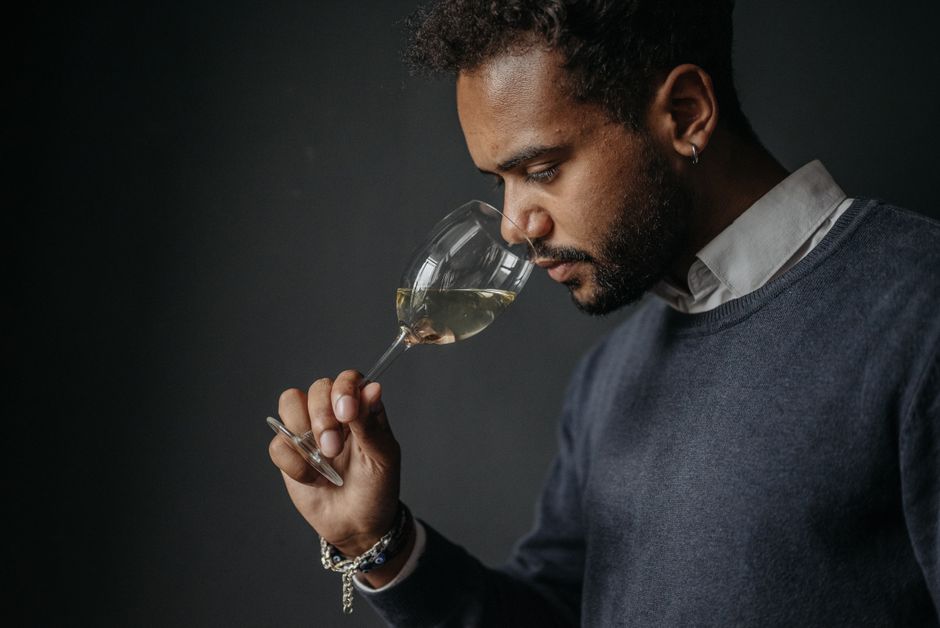
Most of what you think of as a wine's "flavor" arrives through your nose, not your tongue. Your tongue handles sweet, sour, bitter, salt, and texture, while cherry, pepper, or toast are aromas.
A still glass gives you only the aromas that happen to drift off a small, flat surface. Swirling spreads a thin film of wine up the inside of the bowl, which exposes far more liquid to air. More surface means more aroma compounds, like the fruity esters and floral terpenes, escaping into the space above the wine.
The swirl also mixes in a little oxygen. That's why sommeliers say a wine "opens up" after a few turns.
It can clean things up, too. A quick swirl helps blow off a few off-notes that sometimes greet you right after pouring. A whiff of struck match from sulfur dioxide, or a faint rotten-egg smell from hydrogen sulfide, will often fade fast once the wine gets moving.
The Swirl Physicists Took Seriously
Here's the part almost nobody mentions. In 2011, a team of engineers at EPFL, the Swiss federal institute of technology in Lausanne, presented research on wine swirling to the American Physical Society. They called it "oenodynamics."
Using high-speed video, they tracked the wave that forms when you rotate a glass in small circles. That wave runs around the inside wall, and it moves wine in two directions at once: from bottom to top along the glass, and from the center out to the edges. That double churn is why a gentle swirl mixes and aerates so efficiently.
The researchers had a practical reason to care. The same "orbital shaking" was being used to grow cells in large bioreactors, and the EPFL group's orbital-shaken prototypes had passed 3,000 liters. Their follow-up paper in Physics of Fluids (2014) mapped a whole family of waves, from a single crest to two, three, and four crests, up to breaking waves.
One finding translates straight back to your glass: the wave you get depends on how fast you rotate, how wide your circle is, and how much liquid is in the container. Get those three right and the same wave shape repeats at any size. Get them wrong (too much wine, too big a circle) and you're no longer mixing, you're sloshing.
It's a nice reversal of the usual story. Science rarely borrows from the tasting room, but here the swirl you do at a winery bar helped engineers think about how to feed oxygen to cells in a steel tank.
What the Swirl Is Doing Inside Your Glass
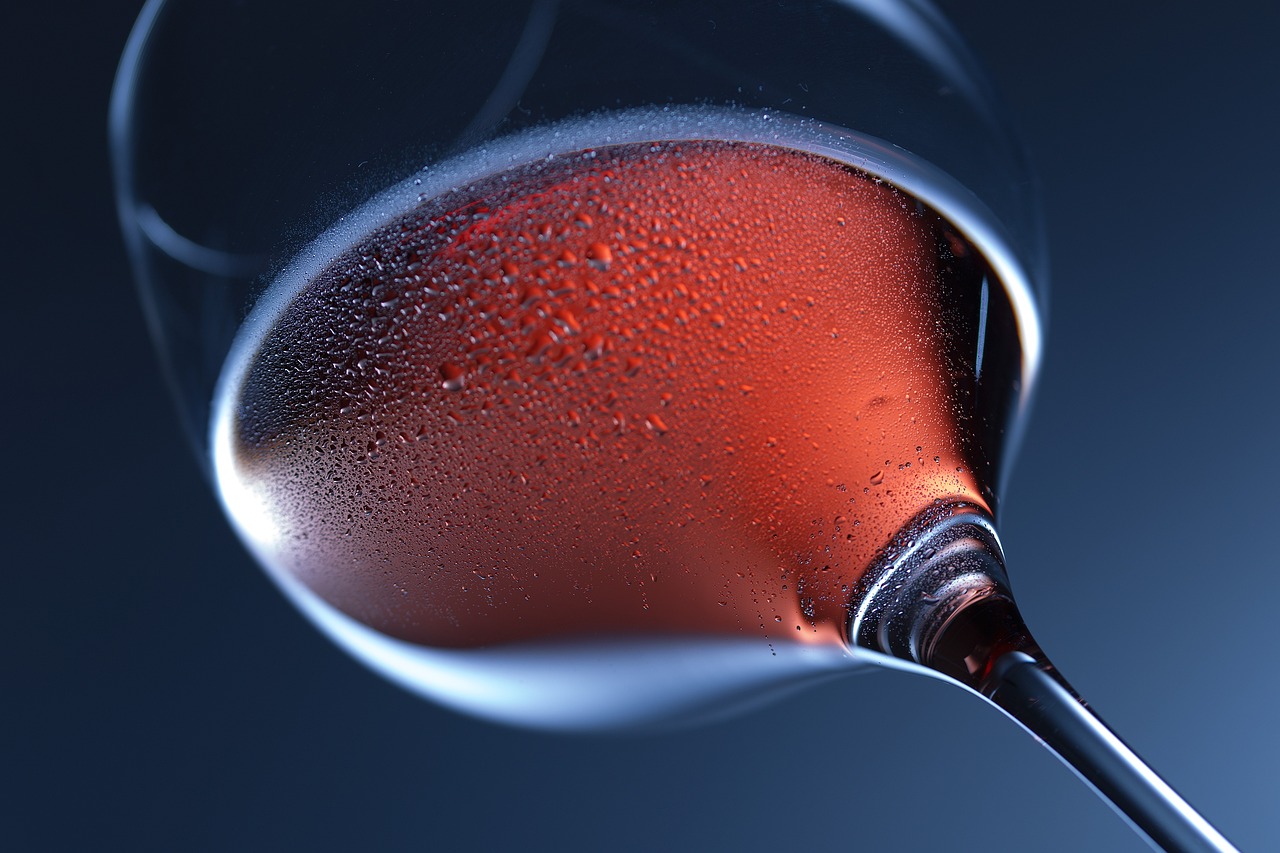
Swirling isn't one effect. It's three, and they stack.
It lifts aroma off a bigger surface
Every turn coats the bowl with a thin sheet of wine that evaporates far faster than the pool at the bottom. That thin film is where most of the aroma you smell comes from. It's also why a wide-bowled red glass gives you more to work with than a narrow juice glass.
It shapes what reaches your nose
In 2015, researchers at Tokyo Medical and Dental University built a "sniffer camera" that images alcohol vapor rising off wine. In a standard wine glass at 13°C (about 55°F), the alcohol vapor formed a ring around the rim, with less alcohol in the center of the opening.
That ring lets you smell fruit and other aromas without a blast of alcohol vapor right up the middle. Martini glasses and straight-sided glasses didn't produce the ring, and neither did the same wine served warmer.
It lets in a measured dose of air
A few swirls add small amounts of oxygen to the wine, which can soften a tight, closed-up young red. Short, gentle swirls help; a minute of frantic swirling can flatten delicate aromas. One sommelier interviewed by Club Oenologique notes that prolonged swirling simply lets aromas evaporate before you smell them.
How to Swirl Without Wearing It
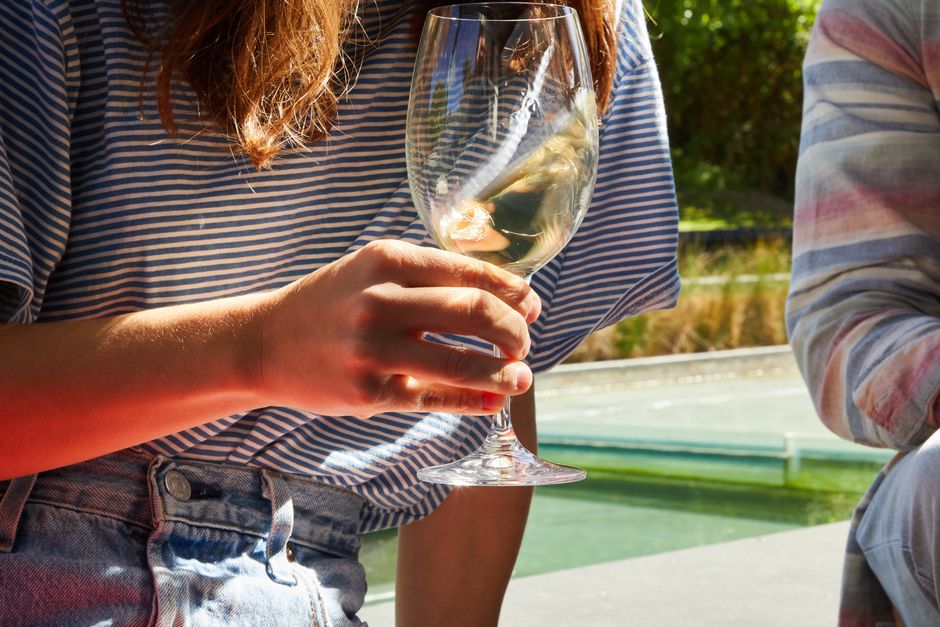
You don't need a fancy wrist flick, just a stable glass and a small circle.
1. Pour less than you think
Glassmaker Riedel suggests filling a red-wine glass about one-third full and a white glass about half. That leaves room for the wave to climb the walls without cresting over the rim.
2. Keep the base on the table
Hold the glass by the stem, leave the foot flat on the table, and draw small circles. This is how most people learn, and it's nearly spill-proof.
3. Swirl for a few seconds, then smell right away
Five to ten seconds of easy circles is plenty. Try a quick sniff before you swirl and another right after, and you'll notice the difference immediately.
The second sniff is usually louder and more layered. If a young red still smells muted, give it another short swirl a minute later rather than one long one now.
4. Lift it off the table once it feels natural
Practicing with water in a wine glass costs nothing. Once the motion is smooth, you can swirl in the air with a light, steady wrist.
What Wine Legs Do and Don't Tell You
After a swirl, you'll see streaks, called legs or tears, slide back down the inside of the glass. Legs are a fact about alcohol, not quality.
The physics was first worked out by James Thomson, brother of Lord Kelvin, in 1855; Italian physicist Carlo Marangoni followed in 1865, and the effect now carries his name. Alcohol evaporates faster than water and has lower surface tension. As the thin film evaporates, the gap in surface tension pulls more wine up the glass until droplets form and fall.
In other words, the swirl just paints the wall; evaporation does the rest. That's why legs keep forming for a while after the glass goes still.
- More alcohol usually means more pronounced legs. A 15% Zinfandel will typically show more than an 11% Riesling.
- Cold suppresses them. Chilling slows evaporation, so a cold white shows fewer legs than the same wine warmer.
- Cover the glass and they stop. No evaporation, no tears.
- They don't signal sweetness or a "better" wine. UCLA mathematician Andrea Bertozzi, who has studied the phenomenon, puts it down largely to alcohol by volume.
Common Swirling Mistakes
- Overfilling the glass. A full glass leaves the wave nowhere to go but over the rim.
- Swirling sparkling wine hard. You'll knock the bubbles out faster; a gentle tilt is enough for Champagne or Prosecco.
- Swirling forever. A few seconds releases aroma; a minute mostly lets it escape before you smell it.
- Judging the wine by its legs. They tell you roughly how much alcohol is in it, and that's about all.
Conclusion
You swirl wine to spread it into a thin film that releases far more aroma, mixes in a little air, and blows off stray sulfur notes. Keep the pour small, the circle gentle, and smell right after. The legs that follow tell you about alcohol, not quality.